
9 hr
Great War Flanders Fields Day Trip from Bruges with Lunch
Full-day journey through WWI history: trenches, memorials, battlefields, and the rebuilt town of Ypres.
Reserve
Hand-picked by our editors — only the best 5 experiences from 60 reviewed.
Verified partners for every tour, free cancellation where available, and instant confirmation on every booking.
9 hr
Full-day journey through WWI history: trenches, memorials, battlefields, and the rebuilt town of Ypres.
Reserve
10 hr
A deeply moving full-day journey through the WWI battlefields, cemeteries, and memorials of Belgian Flanders.
Reserve
2 hr 30 min
Explore medieval Bruges on foot and by canal boat, with a local guide and artisanal chocolate tasting included.
ReservePrices from verified partners. Availability updates in real time at checkout. Free cancellation policies apply where shown.
The landmarks, rooms, and views travelers on this tour remember — all visible on a single visit.
The museum is housed in a meticulously reconstructed 13th-century Gothic building that serves as a symbol of the city's resilience.
Upon entry, visitors receive a microchipped bracelet that activates personal stories of soldiers at various stations throughout the museum.
Climb 231 steps to gain a panoramic view of the Ypres Salient and the surrounding Flanders Fields landscape.
This space uses state-of-the-art multimedia to immerse visitors in the human stories of the Great War.
An extensive archive offering deep insights into historical documents, maps, and photographs from the front lines.
They complement each other; most visitors who choose an ypres day trip from bruges independently value the freedom of exploration, while those preferring guided ypres day trip from bruges tours favor curated narratives of the First World War.
| Feature | Top pick Self-Guided Trip | Guided Battlefield Tour |
|---|---|---|
Logistics |
Manage own transit | Full service provided |
Navigation |
GPS and maps required | Expert local guidance |
Historical Interpretation |
Self-paced reading | In-depth commentary included |
Personal Pace |
Flexible schedule | Fixed group itinerary |
Cost Efficiency |
10 EUR admission | All-inclusive pricing |
Accessibility |
Public transport required | Door-to-door shuttle service |
| See tickets → |
Verdict: Choose the self-guided route if you prioritize solitude at sites like In Flanders Fields Museum, or book ypres day trip from bruges tickets for a comprehensive group experience that handles all complex logistics.
Choose your ticket, select your date, and reserve in under two minutes. Secure checkout handled by our verified partner.
Instant confirmation by email, with a mobile voucher you can save offline. No printing, no queuing at a collection desk.
Arrive at the entrance, show your voucher on your phone, and walk in. Most tickets include priority or skip-the-line access.
Practical details for your visit straight from our verified partners — hours, access, rules, and how to get there.
Grote Markt 34, 8900 Ieper
Main entrance of the Cloth Hall
Train from Bruges to Ieper station followed by a short walk
Follow N365 for a direct ypres day trip from bruges
No formal dress code, but respectful attire is recommended for this memorial site. Wear comfortable footwear as the Ypres Salient Battlefields involve significant walking.
Large bags should be left in provided storage areas. Security protocols are in place to protect the historical artifacts of the In Flanders Fields Museum.
Non-flash photography is permitted for personal use throughout the museum. Please be respectful of the memorial nature of the exhibits.
The museum is fully wheelchair accessible with elevator service between floors. Staff can provide assistance for those with reduced mobility.
Phones may be used for audio guides or personal photos. Please maintain a quiet environment for other visitors.
The In Flanders Fields Museum offers interactive poppy bracelets for younger visitors. The educational content is designed to be accessible to all ages.
No food or drink is permitted inside the galleries. The museum building houses facilities nearby in the Grote Markt area.
Service animals are permitted within the museum premises. Other pets are not allowed inside the exhibition halls.
Each visitor receives a poppy bracelet to activate personal stories. This technology is central to the ypres day trip from bruges experience.
Best time to go, insider tips, nearby landmarks, and the cancellation fine print — flip through to skim what matters to you.
How crowds, weather, and events shift across the year.
Mild weather and blooming poppies in the region.
Longer days perfect for a ypres day trip from bruges.
Reflective atmosphere for commemoration events.
Quieter period for a solemn visit to the battlefields.
Small details that turn a good visit into a great one.
Beat the afternoon crowds by arriving at 10:00.
Plan your ypres day trip from bruges to end at the 20:00 ceremony.
The belfry involves 231 steps.
Secure your entrance to avoid queue times.
Non-bookable sights within a short walk — free to visit, easy to pair.
A memorial to the missing with daily Last Post ceremony
The historic building housing the museum
Scenic historic fortifications surrounding the city
Local history and medieval collections
Flexible, no hidden fees.
Tickets are valid for single entry. Refunds for standard 10 EUR admission are not provided for partial visits.
Hand-picked options within walking distance — pick a district for vibe, or a specific hotel for convenience.
Historic hotels overlooking the market square
Convenient access for a ypres day trip from bruges
Quiet guesthouses in the surrounding countryside
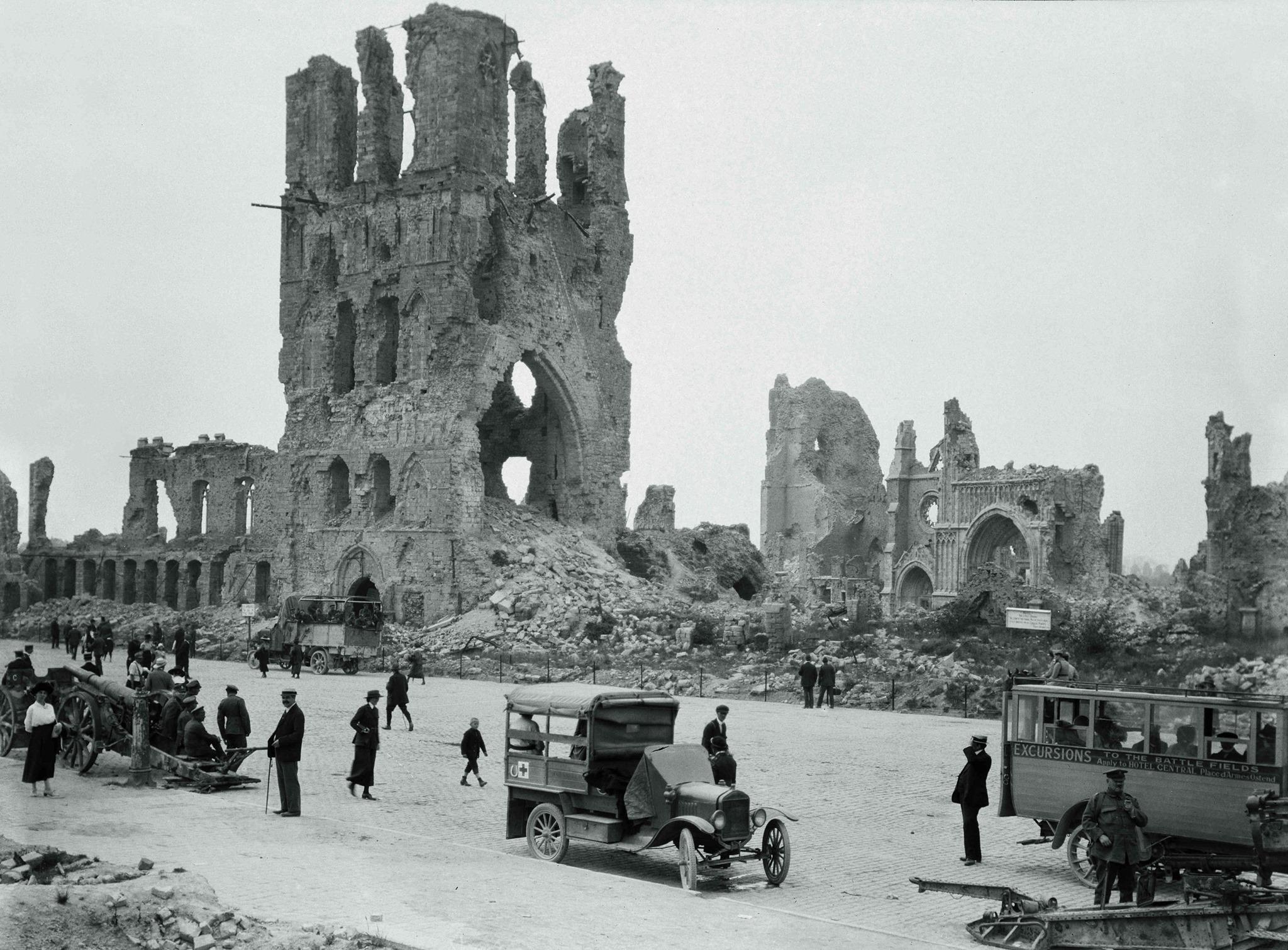
In 1919 Winston Churchill argued that the ruins of Ypres should be left exactly as the shellfire had found them, preserved as a memorial in rubble. The townspeople refused. They rebuilt instead, stone by stone, copying medieval drawings and photographs until the Cloth Hall stood again on the Grote Markt as it had before 1914. The reconstruction took until 1967. A visitor arriving today on an ypres day trip from bruges sees a fourteenth-century silhouette barely fifty years old. Ypres — Ieper in Flemish — grew rich on cloth in the Middle Ages, when its population rivalled London's. That prosperity built the vast market hall now housing the In Flanders Fields Museum at Grote Markt 34. The Salient that surrounds the town was formed in October 1914, when the German advance stalled and the line bulged eastward around the town in a shallow arc of low ridges. Those few metres of elevation — Passchendaele, Messines, Hill 60 — cost roughly half a million casualties across four years and five named battles. The geography explains the cost. The Flanders plain sits barely twenty metres above sea level, drained by centuries of ditches. Shellfire destroyed the drainage. Rain did the rest. At Passchendaele in autumn 1917 men and mules drowned in liquid clay within sight of dry ground. What remains is a landscape of deliberate memory. The Commonwealth War Graves Commission maintains more than 150 cemeteries in the immediate area. Tyne Cot, above Passchendaele, holds 11,961 graves, of which 8,373 are unnamed. The Menin Gate, designed by Reginald Blomfield and unveiled in 1927, carries 54,896 names of the missing — men whose bodies the mud never returned. It was built too small. The remaining 34,984 names went to Tyne Cot's rear wall. The museum inside the Cloth Hall was reworked in 2012 around personal testimony rather than ordnance. Standard adult admission is 10 EUR. Its bell tower stair opens onto the same ridges the artillery once ranged across, which is why a Flanders Fields tour from Bruges usually pairs town and battlefield rather than choosing between them. Beneath the beet fields, the war persists. Belgian bomb disposal teams still recover between 150 and 200 tonnes of unexploded munitions annually — the iron harvest, turned up each spring by ploughs. Guides on a well-run ypres day trip from bruges will point out the shells stacked at field edges, waiting for collection.
"Churchill wanted the ruins left standing; the people of Ypres rebuilt their Cloth Hall instead, and finished in 1967."
A step-by-step walkthrough of the visit — what you'll see, how long each stage takes, and the details that matter.
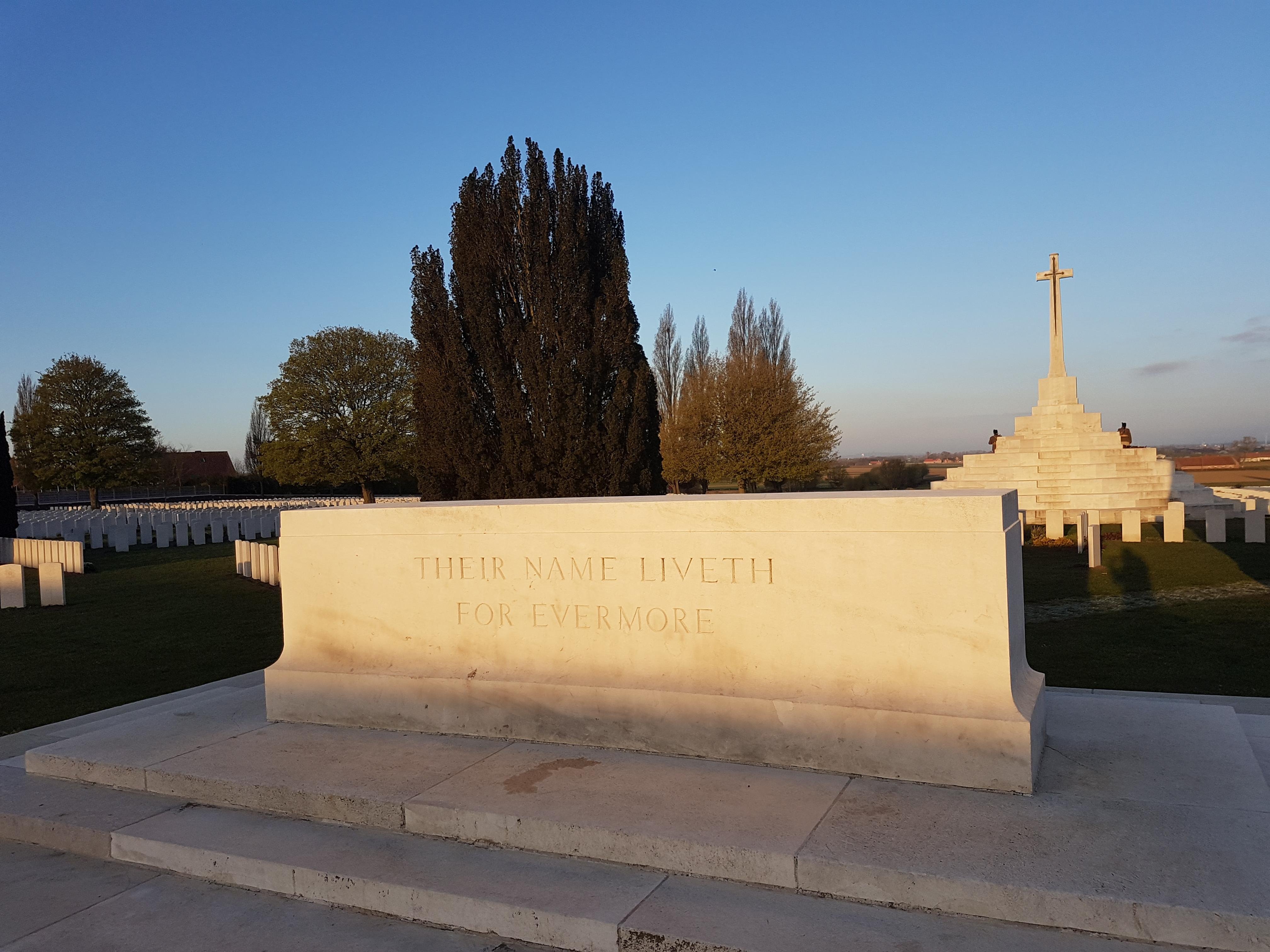
You leave Bruges by coach and cross West Flanders in roughly ninety minutes, watching hedgerows give way to open beet and maize. Most ypres day trip from bruges tours run east to west across the Salient rather than looping, so the day unfolds chronologically. You stop first at a Commonwealth cemetery — often Essex Farm, where John McCrae wrote 'In Flanders Fields' in a concrete dressing station you can still stoop into. You walk the rows. You read ages: nineteen, twenty-two, seventeen. At Tyne Cot you climb the low steps to the Cross of Sacrifice, built over a German blockhouse, and look back down the slope the attacking battalions came up. By midday you reach Hill 62 or Sanctuary Wood, where original trench lines zigzag through beech trees and rainwater still pools in the bottom. You duck through a tunnel section. The clay stains your hands. Afternoon returns you to Ypres itself, to Grote Markt 34. Entry is 10 EUR, the museum opens 10:00–17:30 daily, and you receive a poppy bracelet keyed to one real person's file. Allow 1.5 to 2 hours here. Then you cross to the Menin Gate for eight o'clock, when the Last Post Association buglers stop the traffic — as they have nightly since 1928 — and everyone stands.
The museum is open daily from 10:00–17:30.
Yes, the In Flanders Fields Museum is fully wheelchair accessible.
Storage is available for large items at the museum.
Non-flash photography is allowed throughout the exhibition.
Morning arrivals between 10:00 and 15:30 are recommended for the best experience.
There is no specific dress code, but respectful attire is suggested.
No, please keep food and drinks outside the museum halls.
Public transport or car rental are the best options for your ypres day trip from bruges.
Yes, the museum is family-friendly with interactive features.
Check your specific tour provider, though standard admission is 10 EUR.